COUDUS · 卡达斯
Published on 2026-01-24

Hangzhou Secondary School Completes Integrated Audio-Visual Smart Classroom Upgrade

A leading secondary school in Hangzhou has deployed an integrated multimedia solution featuring high-fidelity audio, interactive large displays, and wireless microphones, significantly boosting classroom engagement and teaching flexibility while setting a new benchmark for smart campus development.
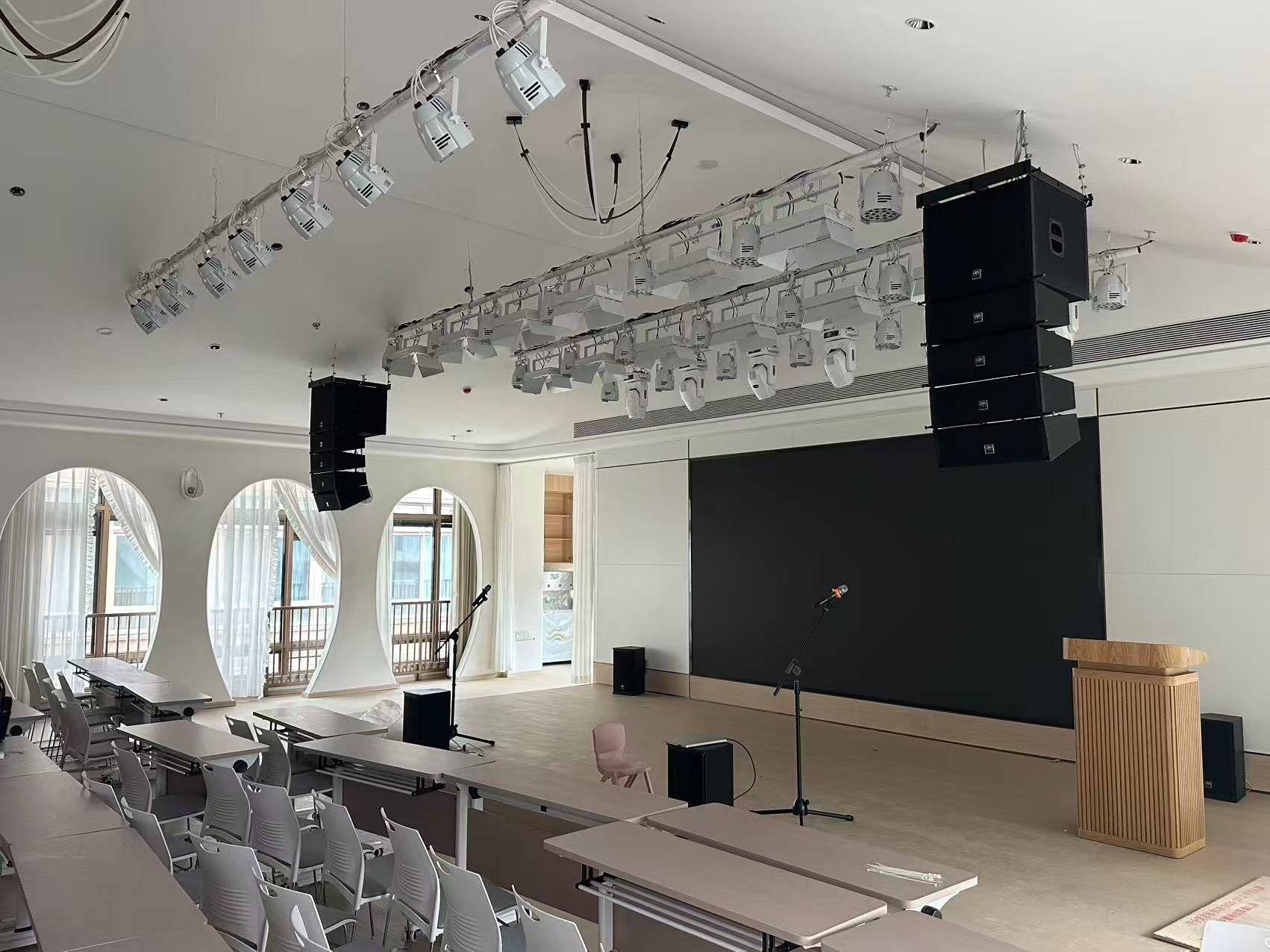

Smart multimedia classroom at Hangzhou secondary school featuring interactive display, ceiling array microphones, and wireless microphone system
Hangzhou, China – August 24, 2026 – In response to the national Education Informatization 2.0 Action Plan and the growing demand for interactive learning environments, a leading secondary school in Hangzhou has completed a comprehensive multimedia classroom upgrade. The project integrates high-fidelity audio systems, interactive large displays, and wireless microphone equipment, creating a future-ready, student-centric smart classroom environment and setting a new benchmark for regional education modernization. Outdated Infrastructure Hinders Teaching Effectiveness Traditional classrooms have long suffered from audio-visual limitations: uneven sound coverage leaves students in the back rows struggling to hear, fixed display positions restrict teaching flexibility, and teachers frequently strain their voices without proper amplification. Industry research indicates that in classrooms without professional sound reinforcement, effective voice transmission rates range only from 60% to 75%, directly impacting students' information absorption efficiency. In response to these challenges, the school administration defined three core priorities: ensuring clear and intelligible audio throughout the classroom, introducing touch-interactive displays to support collaborative learning, and equipping wireless pickup systems to liberate teacher mobility. An Integrated Multimedia Ecosystem Deployed Following thorough solution evaluations, the school selected a comprehensive audio-visual solution encompassing three core product lines. This vendor-integration strategy ensures seamless device interoperability while significantly reducing long-term maintenance costs. Interactive Large Display System: Each classroom was equipped with large-format interactive flat panels (IFPs) serving as the visual hub. These devices support multi-touch, high-precision writing, 4K ultra-HD content presentation, and wireless screen casting from multiple terminals. Teachers can easily access digital teaching resources, while students can present and annotate group discussion outcomes directly on the screen, effectively transforming the classroom from one-way lectures to two-way interactions. Smart Audio Pickup & Sound Reinforcement System: To eliminate pickup dead zones and echo interference, the project deployed a combination of ceiling array microphones and portable wireless teacher microphones. The system incorporates advanced Digital Signal Processing (DSP) chips that automatically focus on the teacher's voice while suppressing ambient noise from air conditioning and room reverberation. This ensures clear, natural sound at every seat in the classroom. Teachers can now cover the entire room without raising their voices, effectively protecting their vocal health. Centralized Control & Networked Management: All devices are managed through a unified AV-over-IP network architecture. IT administrators can remotely monitor device status, schedule automated power on/off policies, and perform troubleshooting online. This approach has significantly reduced manual inspection frequency, improving operational efficiency by over 60%. Teaching Experience Significantly Enhanced Since the system went live, feedback from both teachers and students has been overwhelmingly positive: Increased Classroom Engagement: The interactive displays allow multiple students to operate simultaneously, making group collaboration and presentation more convenient and energizing classroom dynamics. Improved Voice Intelligibility: The new audio system ensures students in the back rows can clearly hear lecture details, which is particularly beneficial for courses with high audio fidelity requirements, such as foreign language listening training. Reduced Teacher Burden: Wireless microphones free teachers from the podium, allowing them to move freely throughout the classroom, closely observe student learning states, and maintain a more relaxed teaching rhythm. Ample Future Expansion Capability: The AV-over-IP architecture reserves sufficient capacity for future integration with lecture recording systems and remote interactive teaching features, allowing the school to scale flexibly as needs evolve. Technology Trends & Industry Significance This deployment aligns with the global education sector's prevailing shift toward networked, intelligent, and integrated audio-visual systems. By using a single network cable to simultaneously carry data and audio-visual signals, the school has simplified cabling while laying a technical foundation for future cross-classroom collaboration and cross-campus resource sharing. This model has already been successfully implemented at prestigious institutions such as Duke Kunshan University and NYU Shanghai. The Hangzhou secondary school case further validates the solution's high feasibility and scalability at the secondary education level. As education infrastructure modernization continues to advance, integrated smart classrooms are poised to become the standard configuration for schools at all levels.